
 State Senators Talk Data Centers, Road Funding, and Prompt Pay with Construction Industry Leaders
By PHIL ALLMEN
Construction Association of Michigan members gathered on November 6, 2026, at the Heathers Club of Bloomfield for a spirited discussion on Michigan issues during its 11th annual Legislative Breakfast.
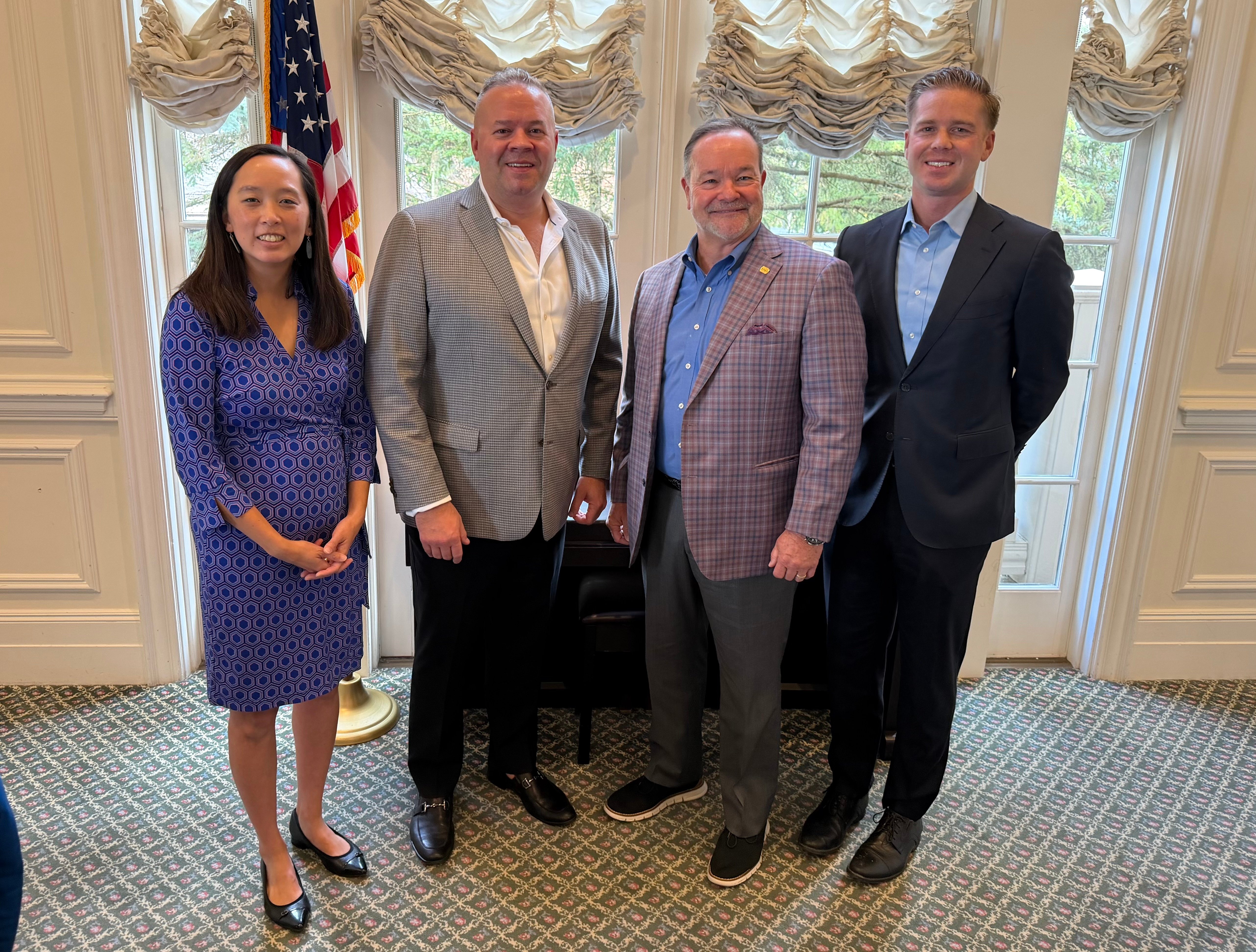
State Senators Stephanie Chang (D-Detroit), who is wrapping up her time in office, and Andrew Beeler (R-Port Huron), who is preparing to take office, discussed prompt pay legislation, data centers, road funding, and other legislative priorities. Jason Wadaga, Vice President of Government Affairs with Kindsvatter Dalling & Associates, moderated the discussion.
Event sponsors included Bricklayers & Allied Craftworkers Local 2, Ideal Contracting, Laborers Local 1076 - LECET, Laborers Local 1191 - LECET, MCA Detroit, Michigan Building and Construction Trades Council, Northern Midwest Regional Council of Carpenters, Novara Law Group, PLLC, Operating Engineers 324, and Solxsys Administrative Solutions.
Presenting sponsors were CAM Comp Workers Compensation Plan, Construction Federal Credit Union, Watkins, Pawlick, Calati & Prifti, PC, and Auger Klein Aller Architects.
Senators Talk Bipartisanship
The period between the election and the installation of newly elected legislators is known as the lame-duck session. It provides an opportunity for current legislators to approve legislation before the new members take office. With a divided state legislature, Chang said she expected few controversial topics will be broached before January.
“There are many bipartisan things that are sitting in the legislature that the Senate has passed that are sitting in the House, many very non-controversial things that the House has passed that are sitting in the Senate. I'm hoping that we can just get some of those done,” Chang said. “I would imagine that many of the big, bold things that Democrats are going to want to accomplish in the next term will obviously wait until next term.”
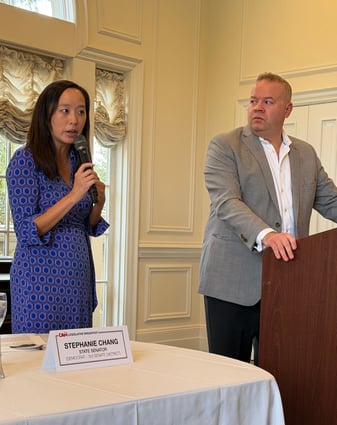 Beeler agreed that there are plenty of nonpartisan issues legislators can address. As he prepares to enter the state Senate as a member of the minority party, he recognizes that issues championed by conservatives may be difficult to advance over the next two years. “I think about things like public safety, things that I actually ran on for which there is broad bipartisan support,” he said. “I think there's an opportunity to perhaps work with folks from similar communities represented by the opposite party.”
Data Centers a Sizzling Hot Topic
Voters at the local and national levels have expressed concerns about the rapid growth of data center proposals as the use of artificial intelligence expands. Ballot measures across the country reflected this opposition, with some seeking to restrict development outright and others serving as advisory measures.
Michigan approved major data center tax breaks in late 2024, prompting dozens of data center proposals throughout the state.
Both Chang and Beeler said that voters have spoken loud and clear that they have concerns. That doesn’t mean Michigan should outright ban them, either. Chang voted against the 2024 tax breaks and co-chaired and supported subsequent bills to add “guardrails” around data centers, including community benefit agreements, zoning oversight, and labor requirements. She also wants additional regulations governing permitting, particularly those related to water usage and electricity costs.
“I think that these bills are actually a starting point for conversation,” she said. “There are a lot of local communities that have passed moratoriums. There are others who are looking to the state for regulations because they don't have the capacity or expertise to try to figure out what they want to do at the local level.”
Beeler said that data centers are “kind of a perfect example of a bipartisan issue. During campaign season, you'd see an ‘Abdul for Senate’ sign right next to a ‘No Data Centers’ sign. And then right next door, you'd see a ‘Mike Rogers for Senate’ sign and a ‘No Data Centers’ sign.”
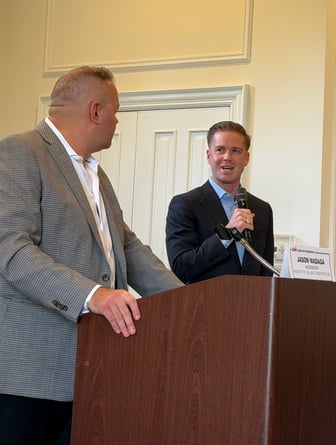 Beeler said that officials need to address residents' concerns, frustrations, and hesitancy about data center development. He opposes any statewide moratorium and prefers to leave the issue to locals. “If you make them play by the same rules, if you don't let them use taxpayer funds, and if you don't make them increase everyone's electric rates… They should play by those rules, and if the local municipality says they want them, bring them on in,” he said.
Prompt Pay Legislation Still Awaits Action
Construction industry leaders have lobbied Michigan legislators to adopt a prompt pay law for private construction for years, though so far there’s been limited movement. Every U.S. state has a prompt pay law for publicly funded construction projects. More than 30 states have a similar law for private-sector projects.
“We’ve been fighting this commonsense law for over 12 years,” said Mark Saba, Executive Director of Sheet Metal and Air Conditioning Contractors’ National Association (SMACNA) Detroit. “It's a simple bill that not only helps the contractors, it helps labor. When the contractor's not paid, they don't pay labor. And for labor, it affects their pension and their health insurance.”
Beeler's predecessor, Dan Lauer, sponsored prompt pay legislation in the past, and Wadaga encouraged Beeler to continue that effort. Although Beeler was unfamiliar with the bill's history, he said his experience as a floor-covering store owner has taught him the importance of getting paid in a timely manner.
Beeler said that his goal is to make it easier for companies to build and grow in Michigan. If there are other states that are doing things better, then Michigan should consider changes that support business growth. “We can look at the other 49 states and see what they're doing and see what's working. If it's something that makes Michigan harder to build and develop and invest in, it has to be on the table for things that we can address,” Beeler explained. “There's probably some way to find a balance so that everyone is happy.”
Prompt pay legislation received a hearing and legislative analysis in 2024, when Democrats controlled the House and Senate and held the governor's office. Chang said it’s an issue she hasn’t paid close attention to but is hopeful it gets revisited next year when Democrats have another trifecta. “As I looked more into this and, especially knowing that we already have something on the books for public projects, it only makes sense that we would also have something for private projects,” she said.
Addressing Road Funding
One CAM member asked the senators about the future of road funding. The latest road funding investment came in the 2026 budget and is tied to a large increase in the state’s marijuana sales tax. The law did not make any structural changes in how roads are funded.
Both Chang and Beeler said they don’t have a solution in mind. Chang challenged the next legislature to have a "serious conversation" about finding additional funding sources as the state's revenues lag. “I think that there are a lot of different things that can be explored so that we can have more revenue for roads, but also for basic things that we constantly are struggling to find ways to fully fund,” she said.
 Beeler disagreed, arguing that higher taxes discourage investment and wealth creation. Instead, he said that legislators should examine how other states are accomplishing more with fewer financial resources.
“I just simply couldn't disagree more with the idea of increasing taxes because we need more money for programs on which we have dumped money over the last eight years and gotten zero to show for it,” he said.
Attracting and Retaining Residents
The senators also discussed Michigan's population challenges, particularly the state's struggle to retain young adults. Both agreed that reversing the trend will require addressing several issues.
Chang said she expects the Democratic trifecta to address the issue next year, referring to the list of recommendations created by Gov. Gretchen Whitmer. Larger cities like Detroit are looking for solutions, as well. She said legislators should look at everything from education to transit.
She said there are multiple reasons different subsets of Michigan’s population leave for other states. Some don’t want to drive and prefer mass transit. She said that nurses are leaving for better-paying jobs with less overtime elsewhere. Michigan winters can deter year-round residents, as well. “There's probably very specific profession-by-profession things that we can do, which would not only help with population growth, but also help with giant workforce shortages,” Chang said.
Beeler said that Michigan needs to attract employers. The states growing now are the ones attracting businesses. And he said those states have low or no taxes. “They have low barriers to attract new employment and make it easier for those employers to hire folks,” he said. “We are bleeding jobs and employers.”
The discussion highlighted the challenges facing Michigan's economy and construction industry, with the senators agreeing that issues such as data center development, workforce retention, and infrastructure funding will remain important topics for the next legislative session.
___________________________________________________________________________________________________
Panel Moderator
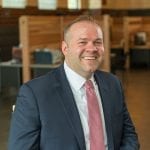
Jason Wadaga
Kindsvatter Dalling & Associates
Jason Wadaga serves as KDA’s lead lobbyist. He can typically be found in legislative meetings, committee hearings, and at legislative sessions representing KDA’s lobby clients. He also serves as the Executive Director for three of KDA’s association management clients, including the Construction Association of Michigan.
His career includes extensive experience in politics and the legislature. He started his political career as a sophomore at Northern Michigan University working on a variety of campaigns that brought him to Lansing. He spent nine years in the Michigan Legislature working in a variety of roles including serving as the Chief-of-Staff to State Senator Rick Jones before joining KDA. Born and raised in Michigan’s Upper Peninsula, Jason lives in East Lansing with his wife Kimberly and sons Nolan and Reid.