
"Weird But Okay": What You Need to Know About the Economy in 2026
By Haven Alfonsi
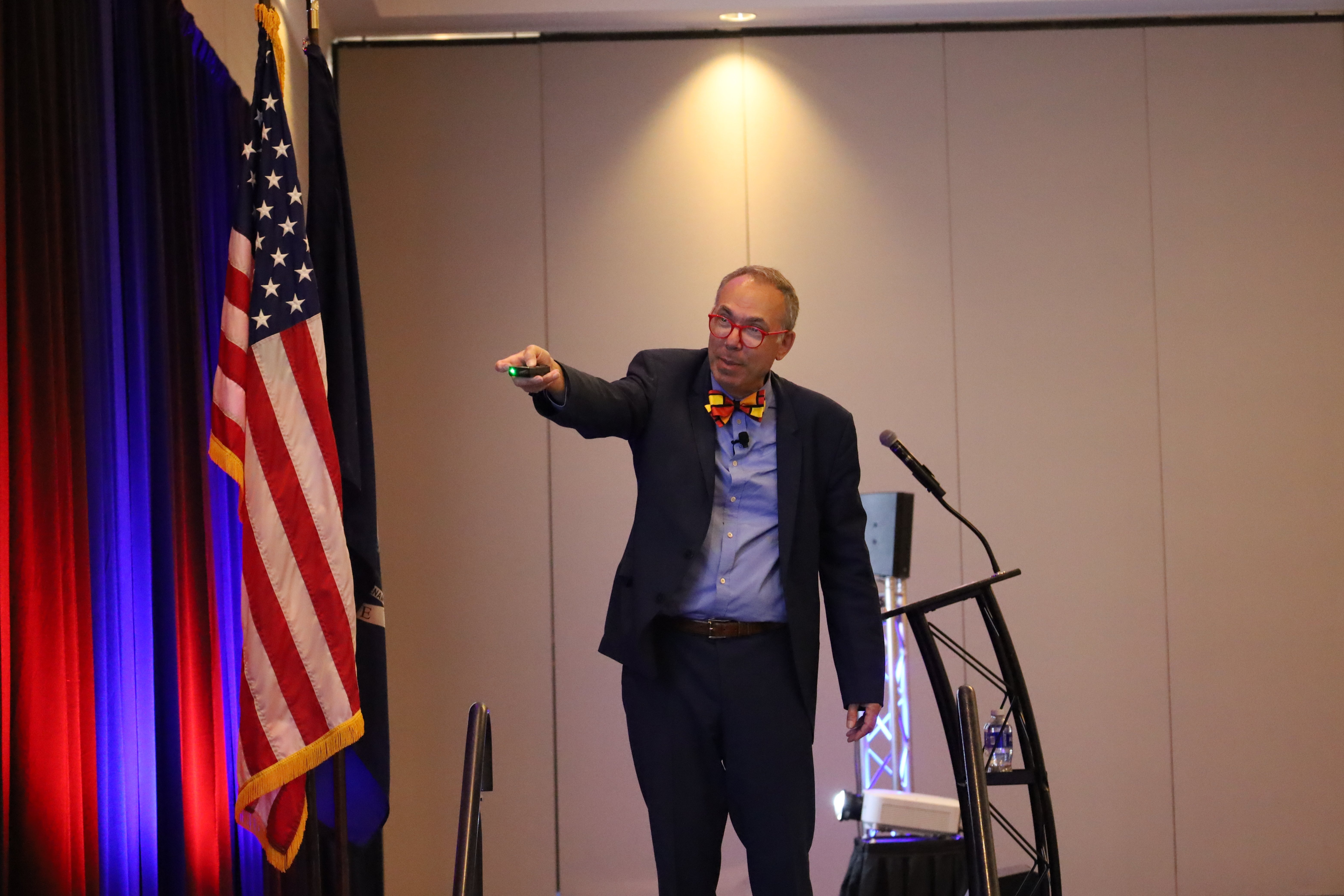
The Construction Association of Michigan (CAM) and the Home Builders Association of Southeastern Michigan (HBA) partnered to present the 16th annual Mid-Year Economic Forecast and State of the Industry Breakfast on Wednesday, June 24th. This event is intended to provide a comprehensive overview of the impact of current and projected economic factors on the construction industry. Elliot Eisenberg, Ph.D., chief economist for consulting agency GraphsandLaughs LLC, presented the forecast.
Despite much uncertainty on both the national and world stage, Dr. Eisenberg said he is comfortable with the near-term trajectory of the U.S. economy. On the surface, many economic indicators remain positive: interest rates are relatively high, the stock market has had a good quarter, and household wealth is up. On the other hand, consumer sentiment remains low, driven largely by higher prices. Unfortunately, prices of finished goods don’t tend to come down. “That’s just the new price,” Dr. Eisenberg said. “You have to just accept it.”
Even with higher prices, consumer spending has remained steady so far. However, Dr. Eisenberg pointed out that the top 10% of wage earners in the country are responsible for 50% of spending. For the average person, disposable income is declining. Additionally, between low birth rates and an increase in deportations, last year was one of the worst years for population growth in U.S. history. Together, these factors could lead to lower consumer spending, which bodes poorly for GDP. However, Dr. Eisenberg predicted that this will be offset by a lower savings rate, due in part to the aging U.S. population, as retirees generally spend more than they save.
During the COVID-19 pandemic and the recovery that followed, stimulus checks provided more income, supply chains suffered, and consumers spent more money on goods than services. Dr. Eisenberg described this as the “perfect recipe for inflation,” the effects of which continue to linger today. Now, however, more money is being spent on services than goods, making it less likely that the country will fall into a severe recession. Just before the pandemic, U.S. household net worth was just under $120 trillion. Today it stands at $184 trillion, making consumers feel wealthier and more willing to spend.
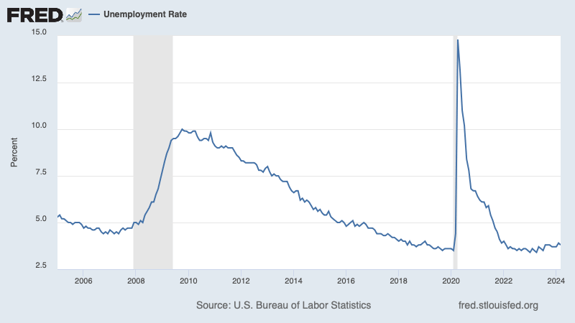
The unemployment rate has risen but remains historically low. Even so, many workers are finding it more difficult to secure full-time employment. The labor force participation rate continues to decline at a pace that, according to Dr. Eisenberg, cannot be explained solely by an aging population. Dr. Eisenberg said that healthcare is the only sector consistently adding jobs, while job growth in every other industry has stagnated. Meanwhile, the total number of hours worked hasn’t increased in three years, so despite low unemployment, there is dissatisfaction among workers stuck in low-paying, temporary, and part-time jobs.
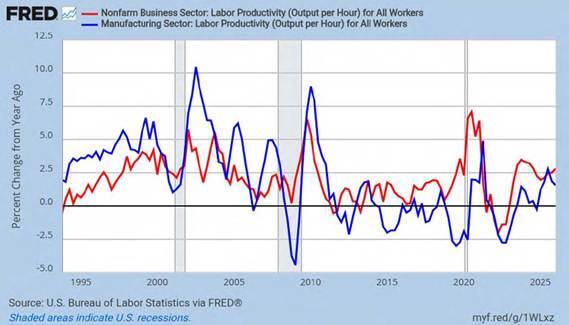
Even with these challenges, GDP is still on the rise due to labor productivity increasing. In summary: “Firms are making a profit. Workers aren’t making a lot of money. Inflation’s high. Job growth is trivial.” Looking ahead, Dr. Eisenberg predicted that inflation will continue to ease, labor markets will weaken, and the Federal Reserve will cut interest rates near the end of the year.
Housing and Construction
The housing market remains challenging. Currently, interest rates are too high for homeowners to want to sell—no one wants to trade a mortgage with a 2.5% interest rate for one with a 6% rate. In addition to high interest rates, home prices have been falling by 3% per year. Dr. Eisenberg expressed concern about the inventory of new houses being at its highest since the housing bust; housing supply is currently at 9.4 months, while a healthy supply should be at around 6 months. Dr. Eisenberg’s advice is for builders to pull back on single-family construction.
Apartments, too, may be overbuilt as builders focused on multi-unit developments coming out of the pandemic. Apartment vacancy rates are increasing, and Dr. Eisenberg expects that they will continue to rise as in-progress apartment buildings are completed. Office vacancy rates are also up, suggesting that now is not the time to build office buildings. However, location matters. Demand for offices is greater downtown than it is in suburban areas.
Considering all of this, it is unsurprising that residential construction has been flat, while private nonresidential construction has declined slightly. Publicly funded construction remains relatively strong but represents a much smaller share of overall construction spending than privately funded residential and nonresidential construction.
At the moment, construction is being largely driven by data centers. A “super low” unemployment rate means that it is difficult to find workers. Inflation in construction is up 55.5% since COVID, so expenses have gone up significantly. Dr. Eisenberg said much of the recent increase reflects tariffs working their way through the supply chain. He suggested that this may move the country toward more domestic manufacturing, but as of now that has yet to happen.
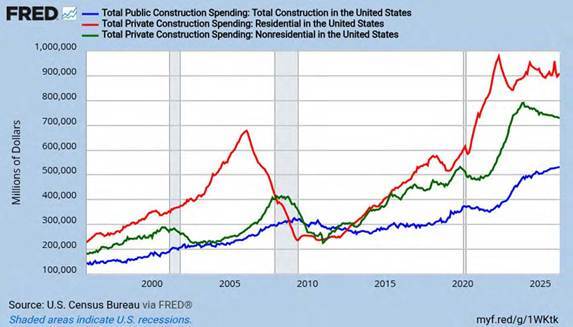
Overall, construction activity is flat, but Dr. Eisenberg is not overly concerned. He expects that home prices will begin to fall, which he would consider to be a good thing, as it will increase affordability for buyers and help absorb the current oversupply of homes. He reiterated that he is not worried about the possibility of a recession, explaining, "These sectors that should drive us in and out of recession are not. And if they don't, we don't go there."
Artificial Intelligence: The Next Economic Driver
At the end of his presentation, Dr. Eisenberg spoke about the impact of artificial intelligence on the economy. He pointed out that AI investment spending this year by five companies alone—Amazon, Google, Meta, Microsoft, and Oracle—is closing in on 3% of the GDP. He compared this to the Louisiana Purchase of 1803, which was also 3% of GDP but was a singular event. AI is looking to be 3% or more of GDP every single year. “This is the biggest thing in 200 friggin’ years,” Dr. Eisenberg said. “Hopefully it works out well.”
In terms of AI’s impact on the labor market, Dr. Eisenberg said he is not overly concerned. Throughout human history, there have been major technological advances, and while they have transformed the workforce, they have not caused the economy to collapse. Instead, inventions such as the automobile and the internet allowed workers to shift away from certain tasks and increase productivity in other areas.
Dr. Eisenberg’s recommendation is to become “really good” at using AI to avoid being left behind. He said the most valuable workers will be those who understand which AI tools are best suited for specific tasks and which programs offer the best value. Additionally, he predicted that as AI takes on more tasks involving skills such as math and reading, proficiency in interpersonal communication will become even more valuable. Overall, he said of the AI boom, “I’m not terrified.”
Key Takeaways
- 2026 should be a decent year for the economy.
- The Fed will likely cut rates once near the end of the year.
- The period of job growth improvement is over.
- Inflation should decline by the end of the year.
- Inflation and, especially, unemployment will be key indicators to watch as the economy moves forward.
An Event Powered by Partnerships
The day kicked off with valuable business networking, a cornerstone of the event’s success, featuring tabletop exhibits from more than 30 industry partners.
This gathering would not have been possible without the generous support of this year’s sponsors:
Platinum Sponsors included D.A. Alexander & Company Inc., Guy Hurley LLC, HouseMax Funding, Lake Michigan Credit Union, Local IQ, and Progressive Plumbing Supply.
Gold Sponsors included CG Financial Services, Hard Rock Stone Works, Operating Engineers Local 324, and VTC Insurance Group.
Resources:
View our event images on Facebook
 Elliot Eisenberg, Ph.D. is an internationally acclaimed economist and public speaker specializing in making the arcana and minutia of economics fun, relevant and educational. He earned a B.A. in economics with first-class honors from McGill University in Montreal, as well as a Master's and Ph.D. in public administration from Syracuse University. Eisenberg, a former Senior Economist with the National Association of Home Builders in Washington, D.C., is the creator of the multifamily stock index (the first nationally recognized index to track the total return of public firms principally involved in the ownership and management of apartments), the author of more than eighty-five articles, serves on the Expert Advisory Board of Mortgage Market Guide and is a regular consultant to several large real estate professional associations, hedge funds, and investment advisory groups. He has spoken to hundreds of business groups and associations, often as a keynote speaker. Learn more at https://econ70.com.